
Business Skills
Must-have Skills Needed for a Healthcare Assistant

If you want to work as a healthcare assistant, or you’re already in the job and want to improve your skills, this guide is for you. We’ll talk about all the must-have skills needed for a healthcare assistant in a detailed way.
Now, to answer it straight, the skills and qualities of a healthcare assistant include being kind, calm, and a good listener. You also need to know how to perform basic tasks, such as helping someone get dressed, eat, and move safely, as well as checking their temperature or blood pressure.
This guide will walk you through every skill you need, why each one matters, and how you can show them in your daily work or job interview. Keep reading, you’ll find lots of helpful tips ahead.
Table of Content
- Why are Skills Important for a Healthcare Assistant?
- What are the Soft and Hard Skills Needed for a Healthcare Assistant?
- Bonus: Skills That Set You Apart
- Wrapping Up
- FAQs
- 1) Do I need any qualifications to become a healthcare assistant?
- 2) Can I become a healthcare assistant even if I have no experience?
- 3) What kind of shifts do healthcare assistants usually work?
- 4) Is the job of a healthcare assistant physically hard?
- 5) How long does it take to become a healthcare assistant?
- 6) What is the difference between a healthcare assistant and a nurse?
- 7) Can healthcare assistants work in people’s homes?
Why are Skills Important for a Healthcare Assistant?
There are several reasons why skills matter so much for a Healthcare Assistant. Being a healthcare assistant is not just about doing tasks one by one. You’re looking after real people who might be sick, old, recovering from something, or living with a disability. That means your job is more than helping them get dressed or bringing them a meal.
The truth is, the skills needed for a healthcare assistant go way beyond basic care. You need to be gentle, patient, and understanding. At the same time, you also need to know how to take vital signs, spot changes in someone’s health, and stay calm during stressful moments.
These skills matter because they help the person feel safe, respected, and truly cared for. Not just physically but emotionally too.
What are the Soft and Hard Skills Needed for a Healthcare Assistant?
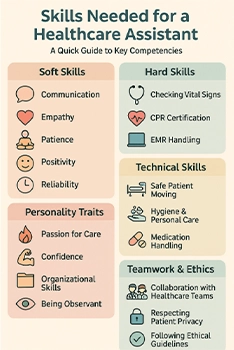
So now, let’s walk through the most important skill areas you’ll need in this job. It’s important to know both the soft and hard skills that truly matter. Soft skills help you connect with people, while hard skills are the practical tasks you need to do the job safely and well.
Below are the critical skills every HCA must master. Let’s go through them step by step.

Soft Skills Every Healthcare Assistant Must Have
Soft skills are personality traits and interpersonal abilities that help you work well with others. In healthcare, they are just as important, if not more, than technical know-how. Here’s a detailed breakdown:
1. Empathy and Compassion
Understanding what others are feeling, and showing you care, makes all the difference. Healthcare assistants work with people going through tough times, whether that’s illness, recovery, or loneliness. Being able to put yourself in someone else’s shoes and respond with kindness helps build trust, improve patient experience, and provide emotional comfort.
Tip: Practice active listening. Make eye contact, nod, and respond thoughtfully.
2. Effective Communication
Great communication helps you deliver better care and build stronger relationships. As a healthcare assistant, you’ll need to talk clearly with patients, families, nurses, and doctors. You’ll also need to listen closely, especially when patients struggle to express themselves.
This includes:
- Explaining procedures in a simple way
- Communicating changes in health to nurses or doctors
- Documenting patient records accurately
- Adapting communication for patients with dementia, speech issues, or language barriers.
3. Patience
Caring for others takes time, and not every day will be smooth. Patients may need help dressing, walking, or eating. They might repeat themselves, get frustrated, or be confused. You’ll need to stay calm and supportive even when the job feels repetitive or stressful.

4. Confidence
You need to be sure of your skills to support others effectively. Even if you’re still learning, you must confidently handle your tasks. Confidence also helps patients feel safe and reassured. Plus, it’s essential when you’re working alone or spotting signs of health deterioration.
5. Positivity
A cheerful attitude can make a huge impact on someone’s day. You’ll be a source of emotional support for many. Staying upbeat, even on challenging days, helps lift the mood of patients and colleagues alike. Positivity also helps build trust and reduce patient anxiety.
6. Reliability and Commitment
Patients depend on you, so you need to show up and give your best. Being on time, dependable, and committed builds trust. If you miss a shift or aren’t fully engaged, it directly affects someone’s care.
7. Emotional Intelligence
Reading and responding to others’ emotions is super important in healthcare. You need to be aware not only of what people say, but how they feel.
Recognise stress, fear, or discomfort, even when it’s unspoken. Emotional intelligence also helps you handle your own stress. So, you have to keep a cool head in difficult situations.
8. Flexibility
Every day is different, so you need to adapt. Patients’ needs change. Schedules shift. You might work in different homes or wards. Being able to adjust and stay focused is a must in healthcare work.
9. Teamwork
You’re part of a wider team, and good teamwork saves lives. You’ll often work alongside nurses, doctors, therapists, or other HCAs. Being able to share responsibilities, take feedback, and support others helps deliver consistent care.
10. Respect and Cultural Sensitivity
Everyone deserves respect, no matter their background, beliefs, or lifestyle. You may support people who are older, have different values, or speak another language. Respecting their dignity, choices, and personal boundaries is a non-negotiable part of being a good caregiver.
Hard Skills and Technical Knowledge You’ll Need
Hard skills are teachable, technical abilities that you often learn through training or work experience. They are just as important as soft skills.
1. Understanding Vital Signs
You’ll often be the first person to notice changes in a patient’s condition.
Here are the common vital signs:
- Blood pressure
- Heart rate (pulse)
- Body temperature
- Breathing rate
- Oxygen levels
Knowing how to check these, interpret them, and report concerns is a healthcare assistant’s critical skills.
Example Table: Normal Adult Vital Signs
| Vital Sign | Normal Range |
| Blood Pressure | 90/60 – 120/80 mmHg |
| Heart Rate | 60 – 100 beats per minute |
| Temperature | 98.6°F (37°C) |
| Breathing Rate | 12 – 20 breaths per minute |
| Oxygen Saturation | 95 – 100 per cent |
2. Safe Patient Handling
Helping someone move the right way is super important to keep patients safe. This includes knowing how to lift someone properly, moving them from a bed to a wheelchair without hurting them, and using tools like hoists or slings safely. You’ll also need to help change their position often so they don’t get pressure sores from lying in the same spot too long.
3. Personal Care Skills
You’ll be helping people with their daily hygiene and personal needs. This can mean bathing and grooming them, helping them get dressed, feeding them, and supporting them when they need to use the toilet. You’ll also help them move around.
So, these are the personal care-related tasks that a healthcare assistant performs. While doing all this, it’s very important to protect their privacy and always treat them with kindness and respect.
4. Basic Medical Procedures
You might be asked to help with some simple medical tasks if you’re trained for it. This could include giving medication, helping with wound care, or collecting samples like urine or stool. You may also check blood sugar levels. What you’re allowed to do will depend on your training, where you work, and the rules in your area.
5. Infection Control
Keeping things clean is a big part of keeping patients safe. You’ll need to wash your hands the right way, wear gloves, masks, or aprons when needed, clean equipment after using it, and throw away medical waste correctly. All these steps help stop the spread of germs and infections.
6. Using Electronic Records
Most hospitals and care homes use digital systems now instead of paper notes. You’ll need to know how to type in updates, check a patient’s care plan, and let the next team know if anything has changed. It’s also super important to keep all personal info private and follow data protection rules like GDPR or Health Insurance Portability and Accountability Act of 1996 (HIPAA), depending on where you work.

Bonus: Skills That Set You Apart
If you want to stand out as a care worker, there are some extra skills that really make a difference. These bonus skills not only boost your confidence but can also make you more valuable to your team and the people you care for.
- Learning New Practices Quickly – Stay updated with evolving care standards.
- CPR Certification – Always a plus; required in many settings.
- Phlebotomy Skills – A great plus if you’ve had phlebotomy training and need to collect blood samples safely.
- First Aid Skills – Knowing what to do in emergencies can save lives.
- Bilingual Abilities – Helpful in multicultural communities.
- Mental Health Awareness – Especially useful when supporting patients with anxiety, depression, or dementia.
Wrapping Up
Becoming a healthcare assistant isn’t just about ticking off a list of daily tasks. It’s about showing up with care, patience, and the right attitude every single day. The skills needed for a healthcare assistant go beyond basic duties. They include communication, personal care, safety awareness, and even emotional support. You’ll need both soft and hard skills, and a genuine passion for helping people.
If you’re someone who loves making a difference and learning as you go, this career can be incredibly rewarding. The world always needs more caring and skilled people like you.
FAQs
1) Do I need any qualifications to become a healthcare assistant?
To become a healthcare assistant, you don’t always need qualifications. Some places will teach you on the job. But having a care certificate or some basic health training really helps and makes you stand out.
2) Can I become a healthcare assistant even if I have no experience?
Yes, you can! Many employers care more about how kind and reliable you are. They are happy to train people who are eager to learn.
3) What kind of shifts do healthcare assistants usually work?
It depends on where you work. You might have morning, evening, or night shifts, and sometimes weekends too.
4) Is the job of a healthcare assistant physically hard?
It can be sometimes. You will often help people move around or stand, so having some strength and energy is important.
5) How long does it take to become a healthcare assistant?
Some jobs let you start right away. But if you want extra training, courses usually take a few weeks or months.
6) What is the difference between a healthcare assistant and a nurse?
Nurses do more complicated medical work and need higher training. On the other hand, Healthcare assistants help with everyday care and support.
7) Can healthcare assistants work in people’s homes?
Yes, many do. Helping people with daily tasks in their own homes is a common job for healthcare assistants.