
Business Skills
Where to Find Phlebotomist Jobs in the UK

So, you’re thinking about getting into phlebotomy or maybe looking for your next role? Great choice. Phlebotomist jobs are in demand across the UK, whether in hospitals, clinics, GP practices, or even mobile roles that take you out on the road. If you’ve got a steady hand and a caring attitude, there’s a job for you out there.
Phlebotomy jobs in the UK can be full-time, part-time, entry-level, or contract-based, depending on what suits your lifestyle and experience. In this guide, we’ll break down the types of jobs available, where to find them, how to apply, and tips to help you land the role you want.
Let’s get started then.

Table of Content
Different Types of Phlebotomist Jobs
Phlebotomy isn’t a one-size-fits-all job. There are many ways you can work in this field based on your experience level, availability, and interests.
Entry Level Phlebotomy Jobs
This is perfect for newcomers to healthcare or fresh graduates of phlebotomy courses.
Entry-level phlebotomy jobs are designed for those who may not have much (or any) direct experience but have completed relevant training or a phlebotomy certification course.
Here, you’ll typically work under the supervision of senior staff and get hands-on training in taking blood, infection control, handling samples, and patient care.
Where to Find These Entry-Level Phlebotomy Jobs
- NHS Trusts often offer training programs for entry-level applicants
- Apprenticeships in healthcare support roles (sometimes leading into phlebotomy)
- Indeed and Reed regularly list junior and trainee roles.
Tip: Include keywords like “trainee phlebotomist”, “healthcare assistant with phlebotomy”, or “entry level phlebotomy jobs” when searching.

Mid-Level Phlebotomy Jobs
This is ideal for candidates with 1–3 years of experience in a clinical setting.
At this stage, you’re expected to work independently, manage your caseload, and sometimes train junior staff. These roles may involve more responsibility, such as drawing blood from difficult veins, working with children, or operating in specialist areas like oncology or haematology.
Here are the Common Settings Where You Can Work:
- Outpatient clinics
- Walk-in centres
- Diagnostic laboratories
- GP practices
Experienced or Senior Phlebotomy Jobs
This is suited for those with 3+ years of experience, leadership ability, or specialist training.
Senior phlebotomists often supervise a team, manage supply stock, maintain safety standards, and ensure staff follow clinical protocols. Some senior roles also involve reporting to senior nurses or departmental managers.
Opportunities Include:
- Team Lead roles in NHS hospitals
- Private clinics that deal with high-volume patient loads
- Specialist departments (A&E, paediatrics, blood donation units)

Part-Time Phlebotomy Jobs
This job is great for those who need flexibility, like students, parents, or those supplementing another job.
Part-time phlebotomy jobs are available across both the NHS and private sectors. Some jobs involve set shifts like weekends or evenings, while others are casual or bank work (as-needed shifts).
Benefits:
- Better work-life balance
- Great for gaining experience while studying or working in another role
- Opportunities for temp-to-perm contracts.
Tip: Use filters like “part-time phlebotomy jobs” or “flexible hours” on job boards.
Mobile Phlebotomy Jobs
This kind of job is perfect if you enjoy variety, autonomy, and travelling within a local area.
Mobile phlebotomy jobs involve visiting patients at home, in workplaces, care homes, or pop-up clinics. These roles have grown in demand since COVID-19, especially with the rise of at-home diagnostic testing and mobile health services.
Who are the Key Employers:
- Private health screening companies like Medichecks, Thriva
- NHS community health teams
- Contract phlebotomy agencies
Mobile phlebotomist jobs often come as contract phlebotomy jobs, which can be flexible, short-term or project-based.
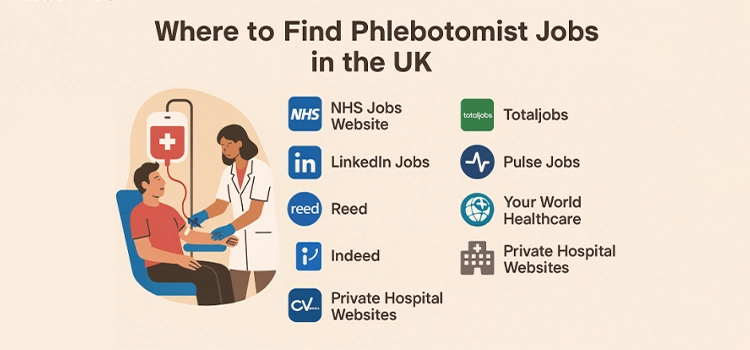
Where to Find Phlebotomist Jobs
There are multiple reliable platforms for finding phlebotomy jobs across the UK. Here’s a breakdown of the most effective sources.
NHS Jobs Website
If you want to work in the NHS, the NHS Jobs website is the best place to start. This is where all official NHS job openings are listed. You can search using words like “phlebotomist,” “phlebotomy,” or “healthcare assistant with phlebotomy.”
It lets you filter by location, pay band, full-time or part-time, and salary. Each job shows what the role involves, what qualifications you need, and when you have to apply by.
A helpful tip for you: create a free account and turn on job alerts so you get a message whenever a new phlebotomy job is posted.
LinkedIn Jobs
LinkedIn is not just for connecting with people. It’s also a great place to find phlebotomy jobs. Many private clinics, labs, and hiring agencies post their job openings here.
You can apply directly using your LinkedIn profile, which works like your online CV. One big plus is that you can apply with just one click. You can also message hiring managers, follow companies, and learn more about where you might work before applying.

Reed
Reed is a big UK job site that has lots of healthcare listings, including phlebotomy jobs. You can filter the results by job type, location, contract length, and pay.
Reed is really useful if you’re open to working through an agency or looking for temporary or contract phlebotomy jobs. Many agencies post their jobs here, so you’ll see more short-term and flexible options.
Indeed
Indeed is one of the most popular job search websites in the UK, and it’s full of phlebotomy job listings. You’ll find jobs from the NHS, private hospitals, GP surgeries, pathology labs, and even mobile phlebotomy roles.
You can upload your CV, apply to jobs quickly, and even read reviews from other employees to learn about the company before you apply. It’s easy to use and regularly updated with new roles.
Other Platforms and Agencies
Besides the big sites, there are a few more places that are also worth checking.
Totaljobs is helpful if you want to work in the private sector. CV Library is another large job site where you’ll find plenty of temporary jobs. Pulse Jobs is a recruitment agency that focuses only on healthcare roles, which is perfect if you’re looking for contract phlebotomy jobs.
Your World Healthcare is also a well-known healthcare recruiter in the UK with lots of job options. You can also check the careers pages of private hospitals like Bupa, Spire, Nuffield, and Circle Health.
They often post jobs directly on their websites. Also, don’t forget Glassdoor for insights into company culture and salaries.

How to Apply for a Phlebotomy Job
When you find a phlebotomy job that interests you, the way you apply can really make a difference.
First, take your time to read the job description properly so you fully understand what they’re looking for. Check the skills and experience they want. Then, update your CV and write a cover letter that matches the job.
Try to show clearly how your experience fits what they’re asking for. Make sure to apply before the deadline, especially for NHS roles, as they usually won’t accept late applications.
And if it’s a private job, it’s a good idea to send a polite follow-up message after applying. It shows you’re serious and interested.
What to Include in Your Phlebotomist CV
A strong Phlebotomist CV is super important to stand out in a competitive job market. It should be clear, focused, and tailored to the specific job you’re applying for.
Must-Have Sections:
- Personal Summary – a few lines summarising your experience and goals
- Skills – highlight key skills like venipuncture, patient interaction, infection control, sample handling, and computer systems
- Work Experience – list roles in reverse chronological order; include your responsibilities and achievements
- Training and Certifications – like Level 2 or 3 Certificate in Phlebotomy, first aid, and manual handling
- References – at least two, preferably healthcare-related.

Career Progression for Phlebotomists
Phlebotomy is surely a rewarding long-term career on its own, or it can open the door to other roles in healthcare. As you gain more experience and training, you could move up to become a senior phlebotomist or a team leader, where you can manage others.
Some people take on broader clinical duties and become healthcare assistants in hospitals or GP surgeries. Others choose to train further and go into nursing or midwifery.
There’s also the option to work in clinical research, helping with blood collection for medical studies, or to become a pathology assistant in a lab with some extra training.
Basically, how far you go really depends on your interest in learning more and taking on new responsibilities.
Wrapping Up
Right now, phlebotomist jobs are in high demand across the UK, especially with more people using home testing and local healthcare services. You’ll find plenty of entry-level phlebotomy jobs, part-time roles, and contract positions available. You just have to use trusted sites like NHS Jobs, Indeed, LinkedIn, and Reed to find openings. Keep your CV clear and focused, check listings regularly, and explore both NHS and private roles, including flexible mobile phlebotomy jobs.
FAQs
1) Do I need a qualification to become a phlebotomist in the UK?
You don’t need any specific qualifications to become a phlebotomist in the UK, but having a few GCSEs, especially in science or English, really helps. Some healthcare experience or a first aid certificate can also make you stand out. Employers mostly look for good communication, attention to detail, and patient care skills.
2) Can I work part-time as a phlebotomist?
Yes, part-time phlebotomy jobs are common, especially in hospitals or clinics where shifts are flexible and can fit around your schedule.
3) What are mobile phlebotomy jobs like?
These jobs involve travelling to patient homes or clinics in the community, and they give you more independence and variety in your day.
4) How much do phlebotomists earn in the UK?
Phlebotomists in the UK usually earn between 24,000 and 30,000 pounds a year. As per Indeed, the average salary for a phlebotomist in England is around 25,319 pounds a year, depending on location and employer.
5) Are contract phlebotomy jobs worth it?
Yes, contract phlebotomy jobs are great if you like flexible working and want to try out different settings. They can even help you land a permanent job later on.